Heritage Concerns Lead to Redesign of Syon Park Padel Courts
New proposal aims to be more sensitive to the historic surroundings
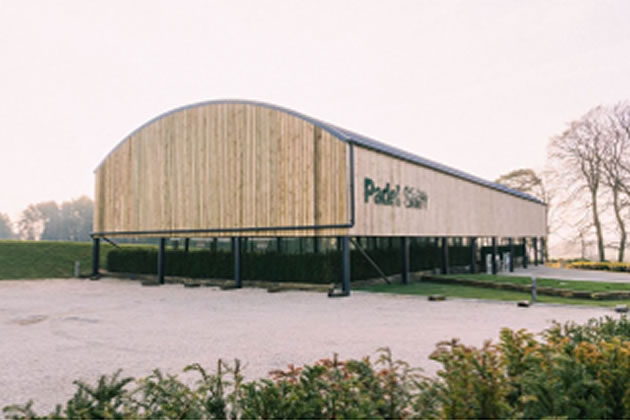
A visualisation of the type of canopy proposed. Picture: ByOthers
|
May 15, 2026
A revised planning application has been submitted for a new padel tennis centre in Syon Park, replacing an earlier scheme lodged at the start of the year. The new proposal — prepared by architects ByOthers for operator Padel Shift — represents a significant redesign, prompted by heritage sensitivities, ecological constraints and feedback on the earlier plans.
The previous application, at the beginning of the year, set out a more intensive development with a larger footprint and a more conventional sports-facility layout. That scheme has now been withdrawn and superseded, with the estate and the applicant opting for a more landscape-led, contextually sensitive approach.
The new proposal aims to be rooted in a deeper reading of Syon Park’s Grade I–listed landscape. As a report submitted with the application notes, “The design concept is underpinned by the analysis of Syon House, its ancillary structures, and the landscape design delivered by Lancelot Brown in the mid-1700s.”
Rather than imposing a rectilinear block of courts, the new proposal arranges the site around serpentine paths, echoing the flowing belts of trees and water bodies that define the northern part of the park. These paths create a sequence of outdoor “rooms” and soften the presence of the courts within the wider landscape.
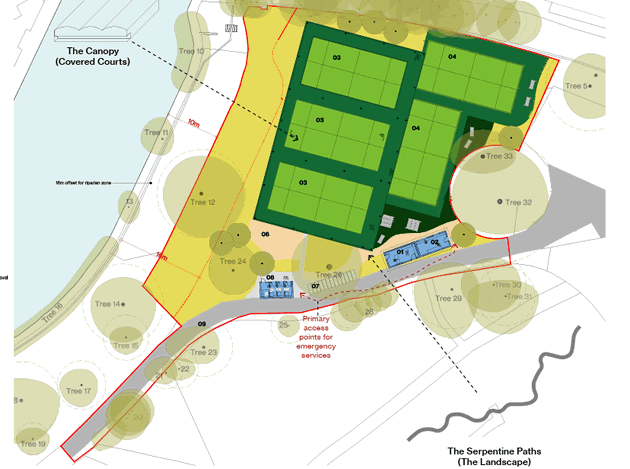
A map showing the location of the proposed courts. Picture: Byothers
The covered courts — the tallest elements — are now positioned directly against the northern retaining wall, where the ground drops toward the River Brent. This allows the structures to be visually absorbed by the mature tree line. Although the canopies are tall, they are “dwarfed by the trees along the northern boundary as a result of both the scale of foliage and site topography.”
Where the earlier scheme used bulkier structures, the new proposal adopts slender steel frames, galvanised metal roofs, and weathered larch cladding — deliberately referencing the lighter ancillary buildings within Syon Park, such as the Great Conservatory. This avoids competing with the heavy masonry of Syon House.
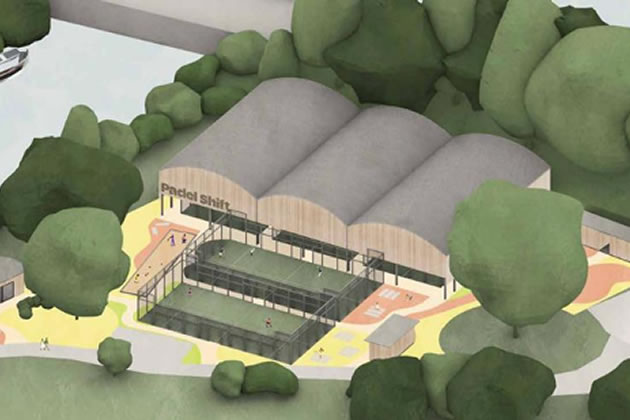
A visualisation of the previous proposal for the site
The courts are set within a “secret garden” environment, with recycled mulch paths, soft landscaping, wildflower planting and new trees. This is a marked shift from the more functional, sports-led layout of the earlier proposal.
The new plan is shaped around root protection zones, retaining more existing trees and avoiding the central Category B specimens identified in the tree survey. The January scheme required more removals and more intrusive groundworks.
Visitors will be encouraged to arrive on foot or by bicycle via the main Syon Park car park, with only limited on-site parking for staff and those with mobility needs. This reduces traffic movements within the park.
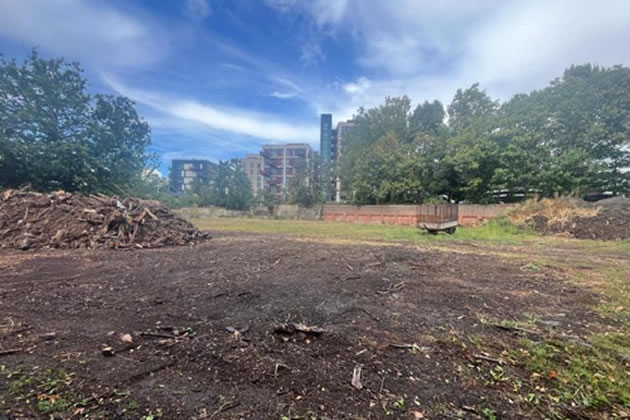 The site at the northern end of Syon Park as it is currently
The revised scheme comprises covered padel courts and open-air courts arranged around serpentine paths, a clubhouse, food & beverage kiosk and changing block, all formed from timber-clad shipping containers, a pétanque pitch, stretching zone and bike storage and extensive new planting and biodiversity enhancements
The architects describe the overall vision as “a quality destination for padel tennis” that remains sensitive to the park’s historic character.
The proposal remains under consultation, and you can find further details and make comments by searching for reference: P/2025/3478 on the planning section of the Hounslow Council web site.
Padel Shift’s plans include five padel courts (three covered by lightweight timber-clad canopies, two open-air), a pétanque court, free to use and three small pavilion buildings—a clubhouse, food and drink kiosk, and changing/WC block—constructed from timber-clad shipping containers. In addition there would be new landscaping, including serpentine paths, wildflower areas and dense planting along with cycle parking, one staff parking space and two accessible spaces.
The application claims that the design draws heavily on the estate’s historic landscape, particularly the serpentine forms introduced by Capability Brown. The covered courts are positioned against the northern retaining wall to reduce their visibility, with the canopies designed to appear lightweight and subordinate to the grander architecture elsewhere in the park.
The courts would be unheated and naturally ventilated, with no enclosed indoor floorspace.
Padel Shift says the venue would operate on a pay-and-play basis with no membership requirement, aiming to keep prices affordable. The company proposes:
- Free or subsidised sessions for local schools and community groups
- A junior development programme and LTA-approved tournaments
- Partnerships with charities such as British Roundnet
- Summer multi-sport camps for children
- Local recruitment for staff roles
- Opportunities for small local businesses to run the food and beverage unit
The West London Chambers of Commerce has issued a letter of support, describing the project as socially and economically beneficial.
The site lies within Metropolitan Open Land (MOL), the Isleworth Riverside Conservation Area, the Grade I-listed Syon Park and Garden, and the buffer zone of the Kew World Heritage Site. It is also in Flood Zone 3.
The applicant argues that the proposal meets national and local policy tests because:
- Outdoor sport and recreation are long-established exceptions to inappropriate development on MOL.
- The canopies are open-sided, visually permeable and positioned where they are screened by mature trees.
- The site is physically and visually separate from the historic parkland that defines Syon’s significance.
- No trees would be removed, and root protection zones have shaped the layout.
- Flood risk can be managed through permeable surfaces and infiltration drainage.
- Biodiversity net gain can be achieved partly on site and partly through off-site credits.
The heritage assessment concludes that the scheme would cause only “minor, less than substantial harm” to the registered park and conservation area, with no impact on the setting of listed buildings or the Kew WHS. Under planning policy, such harm must be weighed against public benefits.
Visitors would be encouraged to walk or cycle from the main Syon Park car park. Based on modelling from other Padel Shift venues, peak-time vehicle movements are estimated at around 20 per hour.
Noise from play could be mitigated by the glass ends of the courts and extended cladding on the northern canopy gable. Lighting would use directional LED fittings with deflector plates, linked to the booking system so that unused courts remain unlit.
Hounslow Council will now assess the application against local and national planning policy, including heritage, ecology, flood risk and MOL considerations. Public consultation will follow, giving residents and stakeholders the opportunity to comment. To make a comment visit the planning section of the Hounslow Council web site and search using the reference: P/2025/3478.
Like Reading Articles Like This? Help Us Produce More This site remains committed to providing local community news and public interest journalism. Articles such as the one above are integral to what we do. We aim to feature as much as possible on local societies, charities based in the area, fundraising efforts by residents, community-based initiatives and even helping people find missing pets. We’ve always done that and won’t be changing, in fact we’d like to do more. However, the readership that these stories generates is often below that needed to cover the cost of producing them. Our financial resources are limited and the local media environment is intensely competitive so there is a constraint on what we can do. We are therefore asking our readers to consider offering financial support to these efforts. Any money given will help support community and public interest news and the expansion of our coverage in this area. A suggested monthly payment is £8 but we would be grateful for any amount for instance if you think this site offers the equivalent value of a subscription to a daily printed newspaper you may wish to consider £20 per month. If neither of these amounts is suitable for you then contact info@neighbournet.com and we can set up an alternative. All payments are made through a secure web site. One-off donations are also appreciated. Choose The Amount You Wish To Contribute. If you do support us in this way we’d be interested to hear what kind of articles you would like to see more of on the site – send your suggestions to the editor. For businesses we offer the chance to be a corporate sponsor of community content on the site. For £30 plus VAT per month you will be the designated sponsor of at least one article a month with your logo appearing if supplied. If there is a specific community group or initiative you’d like to support we can make sure your sponsorship is featured on related content for a one off payment of £50 plus VAT. All payments are made through a secure web site. |