Brentford Gets Big Share of Developer Cash Handout
Several local projects to be funded by Community Infrastructure Levy
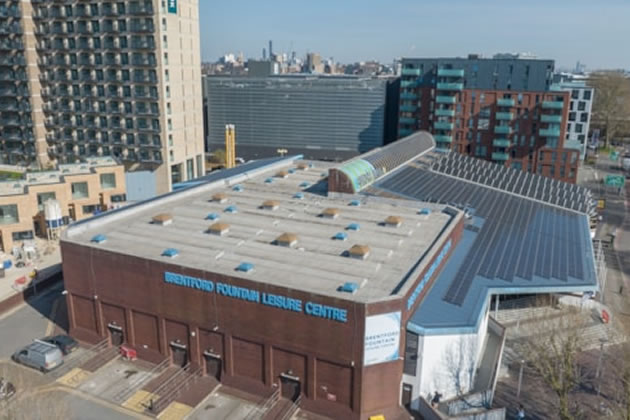
£701,000 to move forward plans for the replacement of Brentford Fountain Leisure Centre. Picture: Hounslow Council
|
February 13, 2026
Projects in and around Brentford have emerged as some of the biggest beneficiaries of the latest round of Community Infrastructure Levy (CIL) funding approved by Hounslow Council, with millions set to flow into leisure, transport, health and public realm improvements across the borough.
At a Cabinet meeting on 10 February, councillors signed off a £4.7 million investment programme drawn from CIL receipts – money paid by developers as new homes and commercial buildings are constructed. The aim is to ensure that growth is matched by the infrastructure communities need, from parks and cycle routes to hospitals and sports facilities.
A significant share of this year’s funding is focused on Brentford and surrounding area with the single largest allocation being £701,000 to move forward plans for the replacement of Brentford Fountain Leisure Centre, covering early design work and community engagement ahead of a full redevelopment.
Brentford is also set to benefit indirectly from £688,000 committed to expanding Hounslow’s District Heat Network, which uses low-carbon energy sources to provide heating and hot water to homes and public buildings. The investment complements a £10.5 million external grant and is expected to support future connections for new developments and major public facilities in and around the town.
Middlesex County Cricket Club will receive £400,000 to reinstate play at Swyncombe Avenue Sports Field, which is earmarked as the new home for Women’s and Girls’ cricket in the county – a move expected to widen participation and improve local sports provision.
Meanwhile, West Middlesex University Hospital has secured £200,000 to upgrade essential electrical infrastructure. The improvements will reduce reliance on emergency generators, strengthen resilience and prepare the site for future connection to the district heat network.
Another major slice of funding is being directed towards the council’s “pavement pledge” – a borough-wide programme to systematically resurface and repair footways that have deteriorated over years of heavy use and utility works. By investing CIL money into long-term improvements rather than short-term patching, the council aims to create safer, smoother and more accessible streets, particularly in high-footfall areas such as town centres and around transport hubs.
Sustainable travel also features prominently in the package, with £330,000 set aside for new priority cycle lanes to expand Hounslow’s safer cycling network. Alongside schemes to improve parks, tennis courts, streets and flood-risk resilience, the programme is designed to deliver visible upgrades in everyday local infrastructure.
From a financial perspective, the council says allocating Strategic CIL to projects already in its capital programme will save more than £200,000 a year by reducing the need for borrowing and associated interest costs.
Deputy Leader of the Council and Cabinet Member for Assets, Regeneration and Development Councillor Tom Bruce said the funding ensures development delivers real benefits for residents.
“It is vital that new development directly benefits local people,” he said. “This year’s CIL programme funds the projects residents tell us matter most, including safer streets, better parks, improved health facilities and high-quality community spaces.
“I’m delighted that this funding will ensure that growth in Hounslow is matched by the investment needed to support thriving, sustainable neighbourhoods, as well as making our borough more attractive to investors as we pursue our ambitious plans for economic growth and regeneration.”
The Community Infrastructure Levy is a planning charge introduced by government that allows local authorities to collect contributions from developers when new buildings are constructed. Unlike older, site-specific planning obligations, CIL is designed to fund a wide range of infrastructure needed to support growth across an area – such as transport improvements, schools, health facilities, parks and community spaces.
In Hounslow, 80 per cent of CIL receipts are classed as Strategic CIL and used for borough-wide infrastructure projects, while 15 per cent is set aside as Neighbourhood CIL to support smaller, community-led schemes in the areas where development takes place.
Like Reading Articles Like This? Help Us Produce More This site remains committed to providing local community news and public interest journalism. Articles such as the one above are integral to what we do. We aim to feature as much as possible on local societies, charities based in the area, fundraising efforts by residents, community-based initiatives and even helping people find missing pets. We’ve always done that and won’t be changing, in fact we’d like to do more. However, the readership that these stories generates is often below that needed to cover the cost of producing them. Our financial resources are limited and the local media environment is intensely competitive so there is a constraint on what we can do. We are therefore asking our readers to consider offering financial support to these efforts. Any money given will help support community and public interest news and the expansion of our coverage in this area. A suggested monthly payment is £8 but we would be grateful for any amount for instance if you think this site offers the equivalent value of a subscription to a daily printed newspaper you may wish to consider £20 per month. If neither of these amounts is suitable for you then contact info@neighbournet.com and we can set up an alternative. All payments are made through a secure web site. One-off donations are also appreciated. Choose The Amount You Wish To Contribute. If you do support us in this way we’d be interested to hear what kind of articles you would like to see more of on the site – send your suggestions to the editor. For businesses we offer the chance to be a corporate sponsor of community content on the site. For £30 plus VAT per month you will be the designated sponsor of at least one article a month with your logo appearing if supplied. If there is a specific community group or initiative you’d like to support we can make sure your sponsorship is featured on related content for a one off payment of £50 plus VAT. All payments are made through a secure web site. |